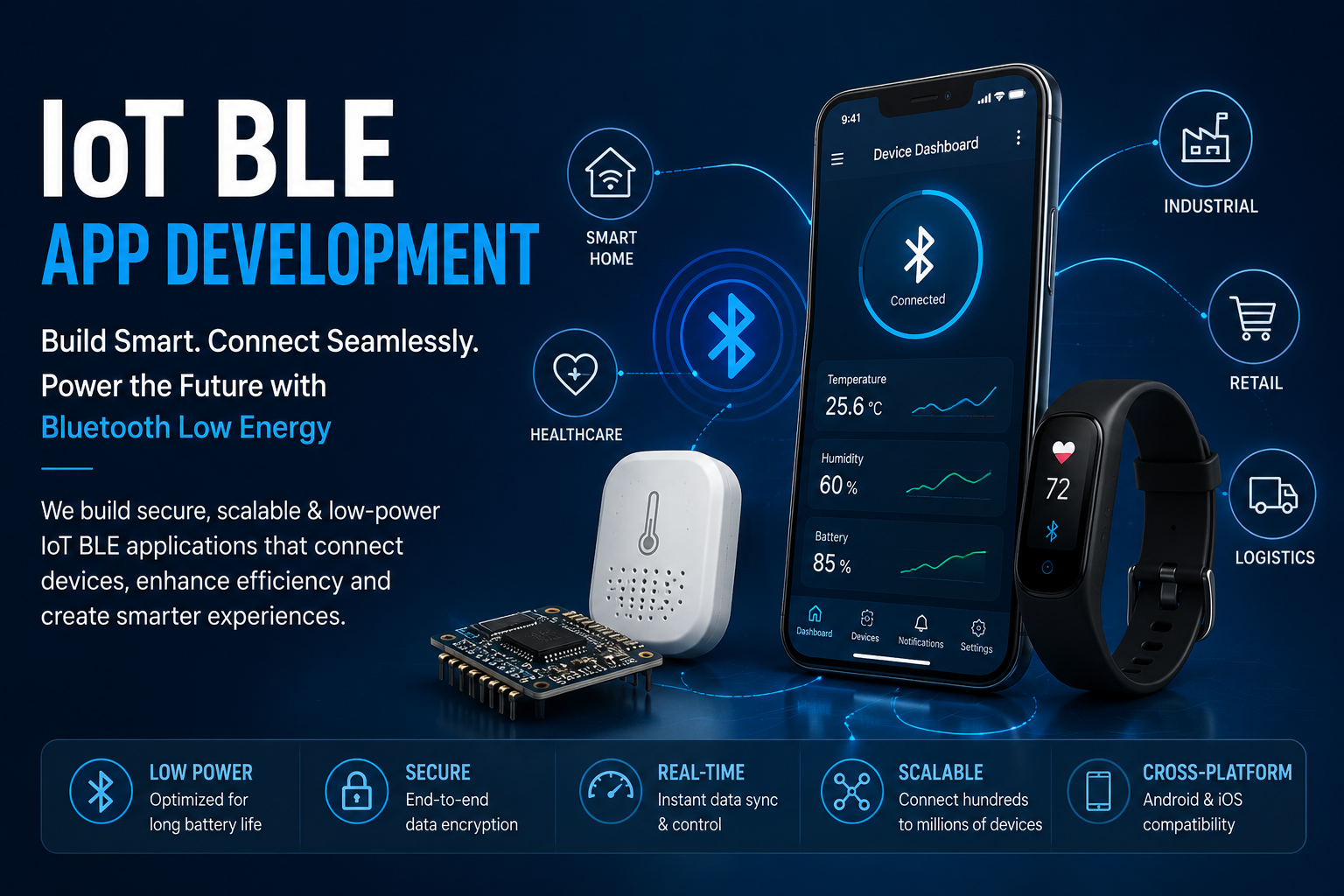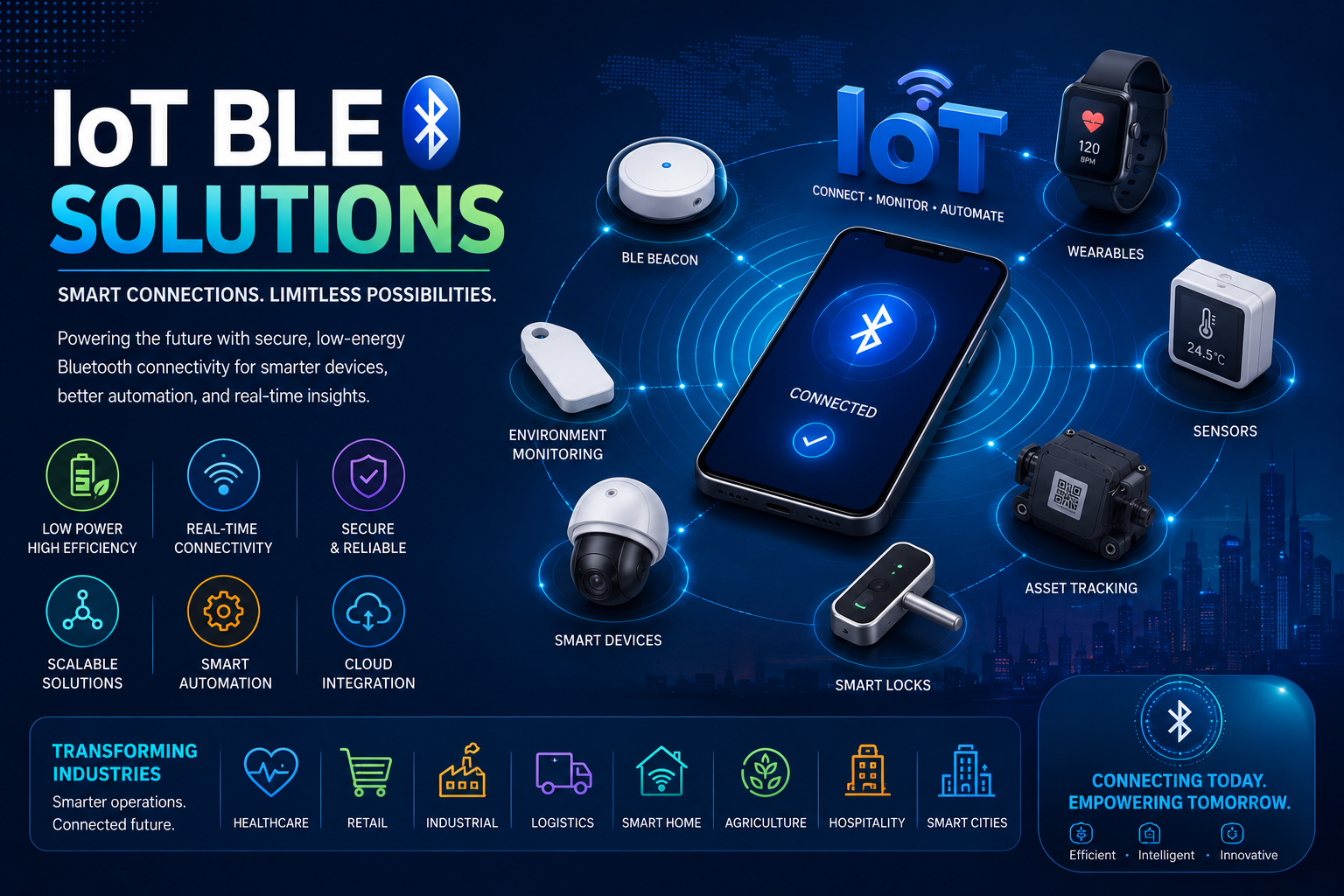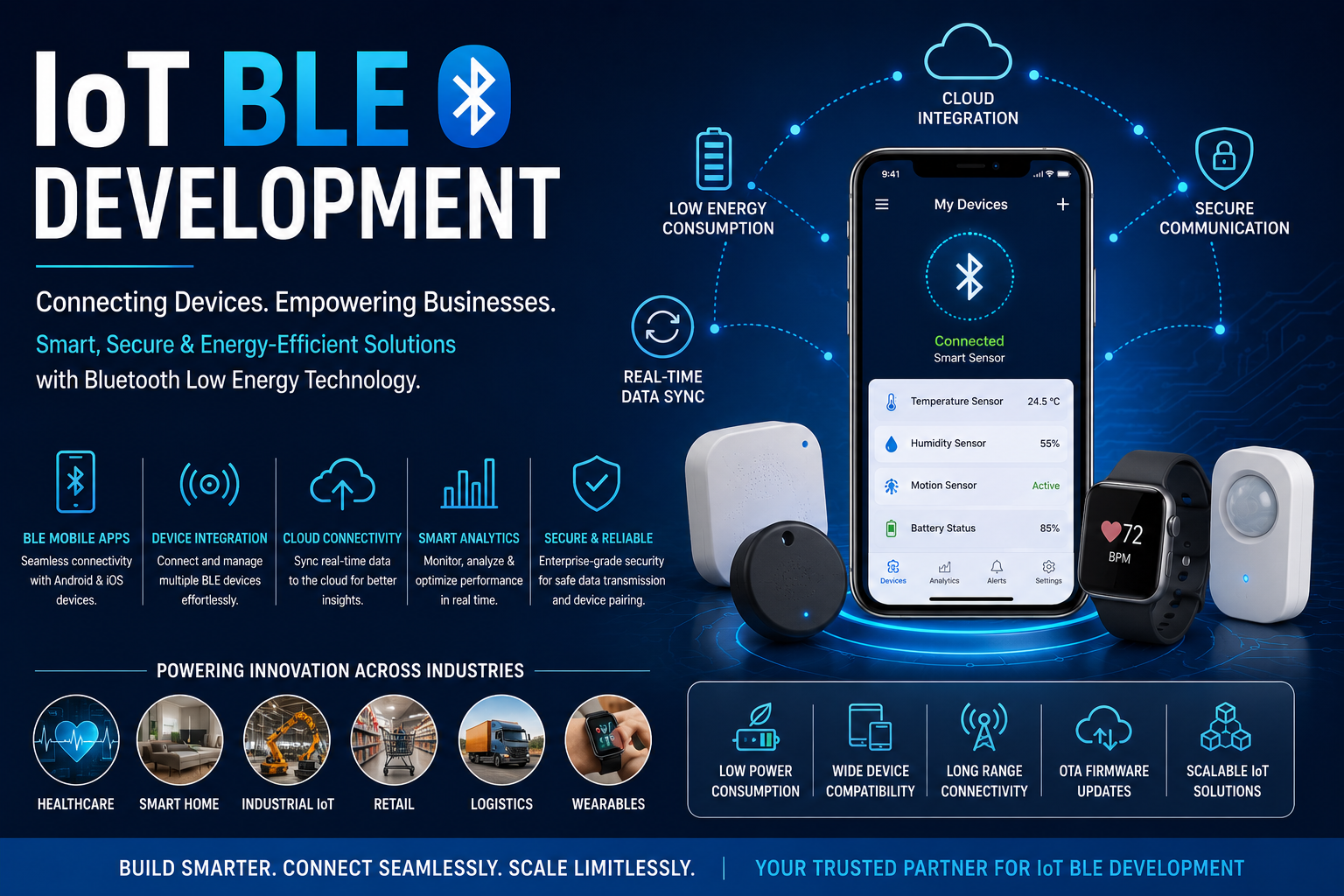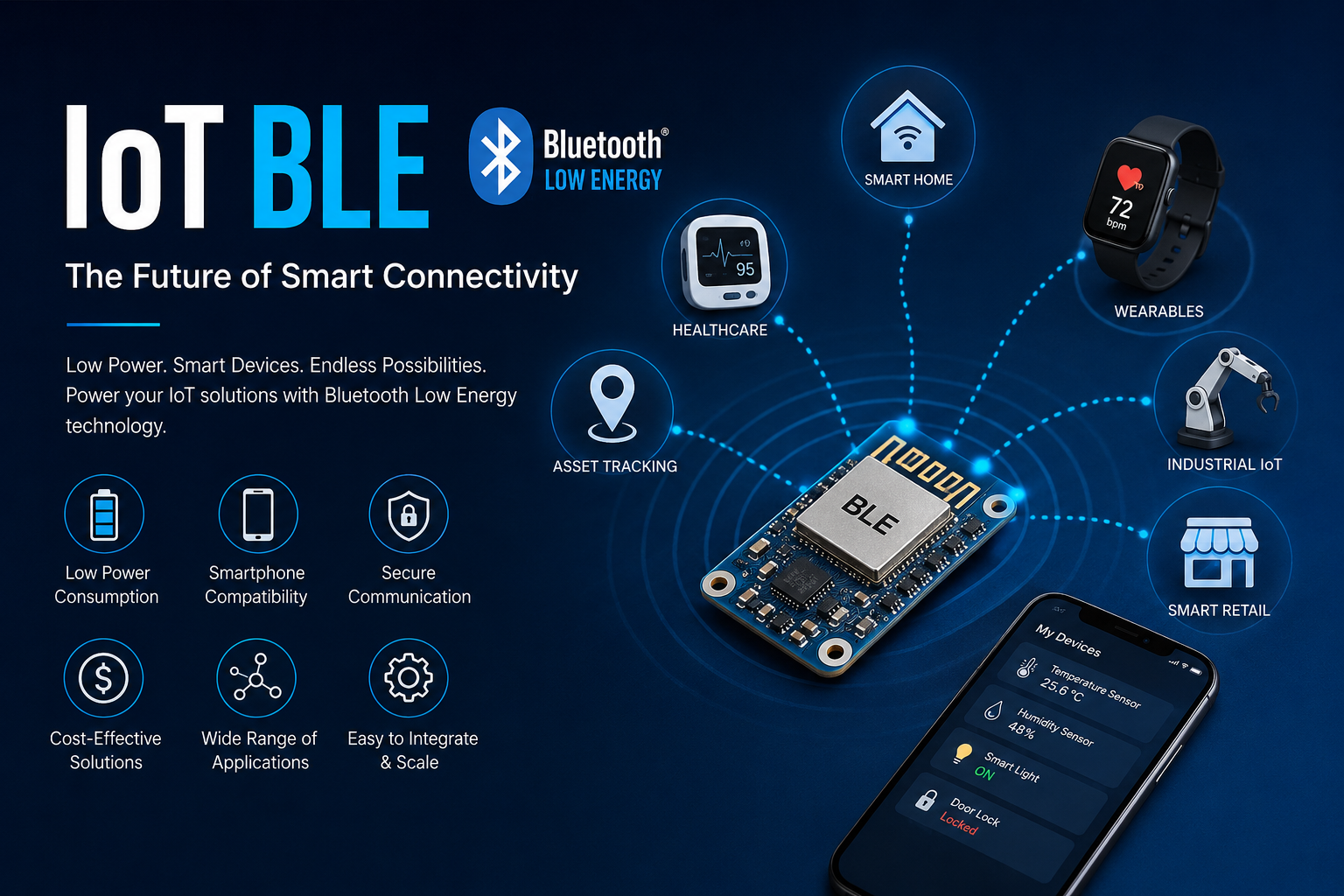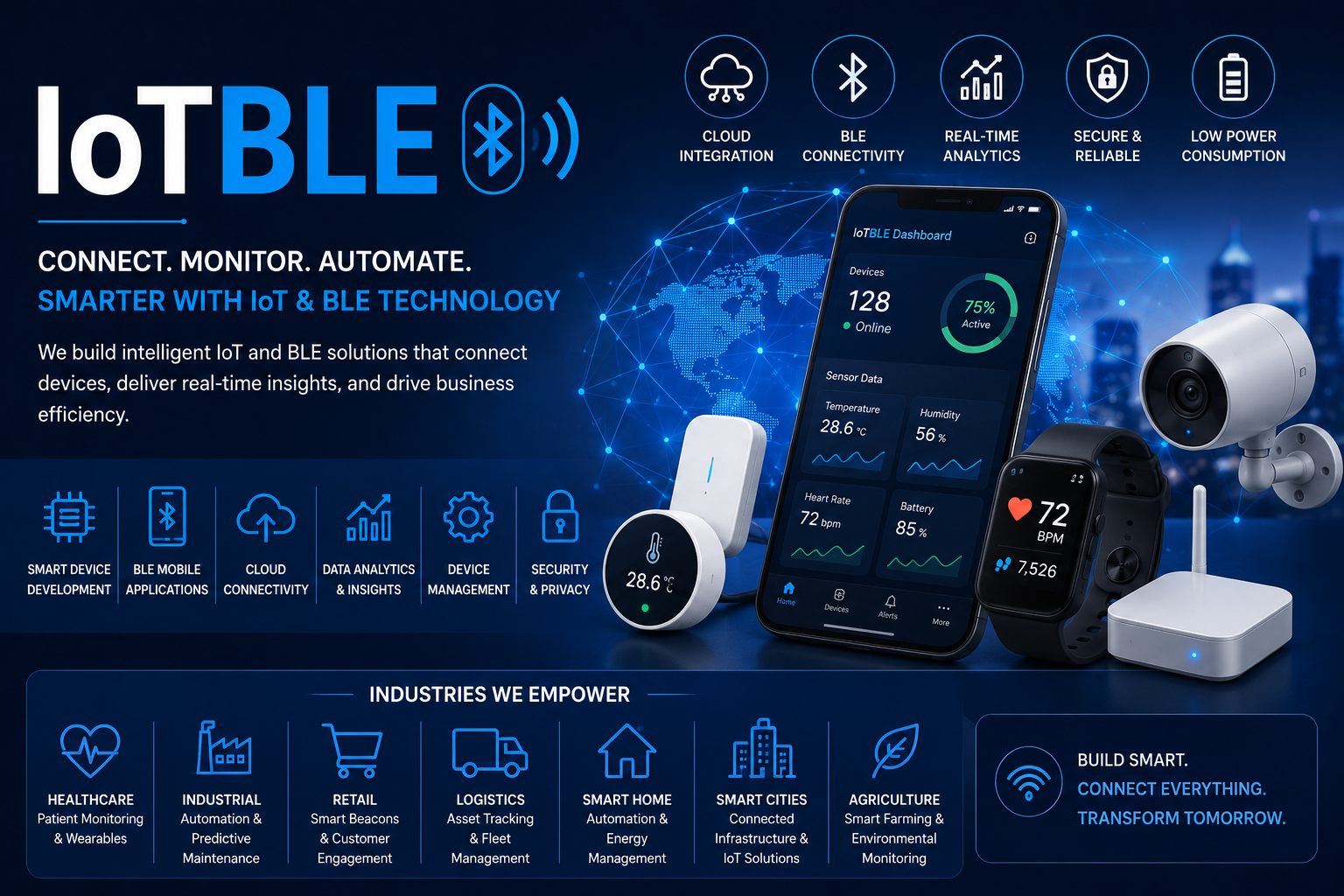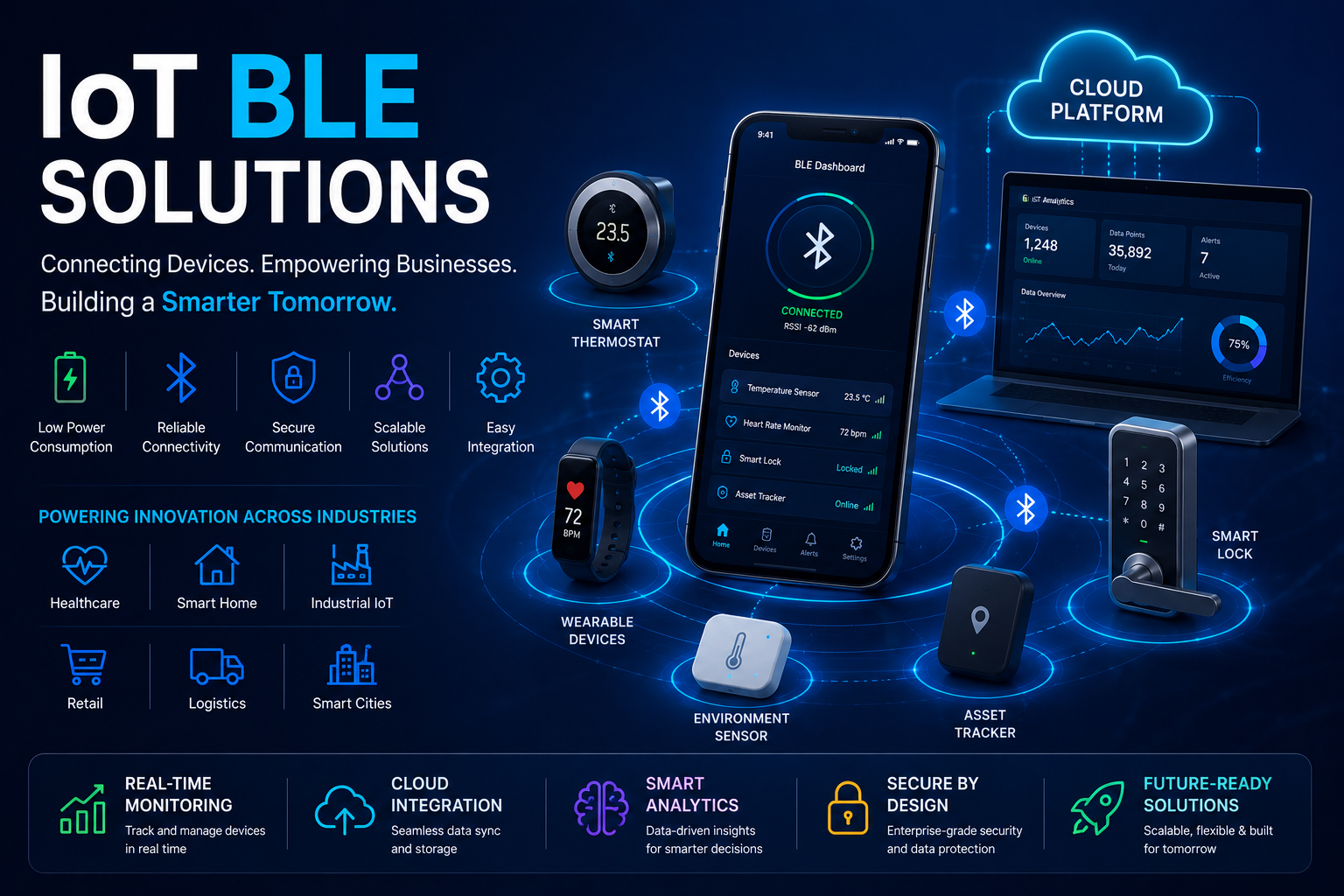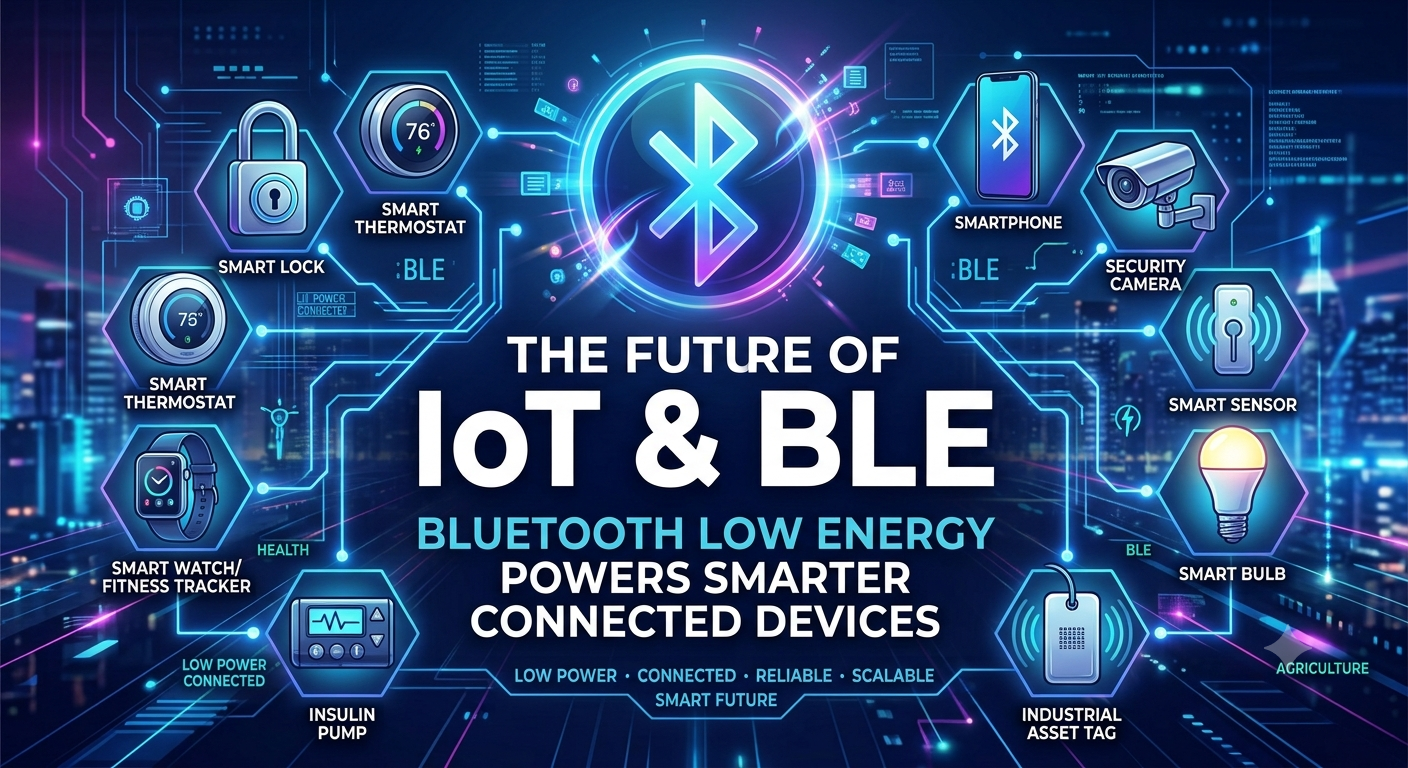
The Internet of Things (IoT) has evolved from a futuristic concept into the foundation of modern digital transformation. Millions of smart devices now communicate seamlessly, collecting data, automating operations, and improving everyday experiences.
At the heart of this revolution is Bluetooth Low Energy (BLE)—a wireless technology specifically designed for low-power, secure, and reliable communication between connected devices.
As businesses continue investing in smart healthcare, industrial automation, wearable technology, smart homes, retail solutions, and asset tracking, BLE has become one of the most important communication technologies in the IoT ecosystem.
In this article, we’ll explore why IoT and BLE are becoming inseparable and how businesses can leverage them to build intelligent products for the future.
What is Bluetooth Low Energy (BLE)?
Bluetooth Low Energy (BLE) is a wireless communication protocol introduced as part of Bluetooth 4.0.
Unlike classic Bluetooth, BLE focuses on:
- Ultra-low power consumption
- Fast device discovery
- Secure communication
- Low latency
- Cost-efficient deployment
- Long battery life
Many BLE-powered devices can operate for months or even years on a single battery, making them ideal for IoT applications. BLE continues to evolve with better efficiency, positioning features, and lower latency in newer Bluetooth generations.
Why BLE is Perfect for IoT
IoT devices require continuous communication while consuming minimal energy.
BLE solves this challenge by offering:
1. Low Energy Consumption
Battery-operated sensors can remain active for years without frequent charging.
Examples include:
- Temperature sensors
- Smart locks
- Medical wearables
- Fitness trackers
- Environmental monitoring devices
2. Native Smartphone Compatibility
Nearly every smartphone supports BLE.
This means businesses can develop mobile applications that communicate directly with IoT devices without requiring additional hardware.
3. Fast Pairing
BLE devices establish connections quickly, improving user experience.
This is essential for:
- Healthcare monitoring
- Smart retail
- Industrial inspection
- Consumer electronics
4. Secure Communication
Modern BLE supports:
- Encryption
- Authentication
- Secure pairing
- Privacy features
Proper implementation remains essential because IoT security depends on device design as well as the protocol itself.
IoT + BLE Applications Across Industries
Smart Healthcare
Healthcare is rapidly adopting BLE technology.
Examples include:
- Heart rate monitors
- Blood pressure monitors
- Glucose monitoring
- Remote patient monitoring
- Smart thermometers
Doctors can monitor patient health in real-time without requiring hospital visits.
Smart Homes
BLE powers:
- Smart lighting
- Door locks
- Security systems
- Motion sensors
- Smart thermostats
- Connected appliances
These devices communicate efficiently while consuming very little power.
Industrial IoT
Manufacturing companies use BLE for:
- Predictive maintenance
- Machine monitoring
- Worker safety
- Equipment diagnostics
- Factory automation
- Digital inspections
Retail
Retail businesses leverage BLE for:
- Indoor navigation
- Smart shelves
- Customer engagement
- Beacon marketing
- Personalized promotions
- Queue management
Asset Tracking
BLE beacons help organizations track:
- Medical equipment
- Warehouse inventory
- Manufacturing tools
- Logistics containers
- Vehicles
- High-value assets
Edge AI + BLE: The Next Big Revolution
One of the biggest trends in 2026 is the convergence of Edge AI and BLE.
Instead of sending all sensor data to the cloud, intelligent devices can now process information locally.
Benefits include:
- Faster response times
- Reduced cloud costs
- Improved privacy
- Lower bandwidth usage
- Offline functionality
- Real-time decision making
This combination is powering smarter healthcare devices, factories, and buildings.
BLE Mesh Networking
Traditional BLE connects devices one-to-one.
BLE Mesh enables hundreds or thousands of devices to communicate as a network.
Applications include:
- Smart buildings
- Airports
- Warehouses
- Hospitals
- Smart cities
- Large campuses
Mesh networking improves coverage, scalability, and resilience for enterprise IoT deployments.
Key Challenges in IoT BLE Development
Although BLE offers significant advantages, developers must address several challenges.
Battery Optimization
Efficient scanning intervals, advertising rates, and sleep modes are essential for maximizing battery life.
Cross-Platform Compatibility
iOS, Android, Windows, and embedded Linux each handle BLE differently, requiring careful testing.
Security
Developers should implement:
- Secure pairing
- End-to-end encryption
- Device authentication
- Firmware updates
- Access control
Scalability
Enterprise deployments may involve thousands of connected devices, requiring robust architecture and fleet management.
Emerging Trends in IoT BLE
The future of BLE looks promising.
Some emerging trends include:
- AI-powered BLE applications
- Bluetooth Mesh expansion
- Edge Computing
- Digital healthcare
- Smart manufacturing
- Location intelligence
- Predictive maintenance
- Smart logistics
- Connected vehicles
- Smart agriculture
Benefits for Businesses
Organizations investing in IoT BLE solutions gain:
- Lower operational costs
- Better automation
- Improved customer experiences
- Increased productivity
- Real-time visibility
- Data-driven decision making
- Reduced maintenance costs
- Enhanced operational efficiency
Choosing the Right IoT BLE Development Partner
Developing a successful IoT solution requires expertise across multiple disciplines.
A reliable development partner should provide:
- BLE firmware development
- Embedded systems engineering
- Mobile application development
- Cloud integration
- IoT architecture design
- Security implementation
- Device testing
- Long-term maintenance
Conclusion
Bluetooth Low Energy is no longer just another wireless protocol—it has become one of the core technologies driving the Internet of Things. From healthcare and retail to manufacturing and smart homes, BLE enables reliable, energy-efficient communication between connected devices while supporting modern trends such as Edge AI and mesh networking.
Organizations that adopt IoT BLE solutions today will be better positioned to build scalable, intelligent products that improve efficiency, enhance user experiences, and unlock new business opportunities.
Whether you’re developing a wearable, a smart medical device, an industrial monitoring system, or a connected consumer product, IoT BLE is the foundation for the next generation of smart innovation.