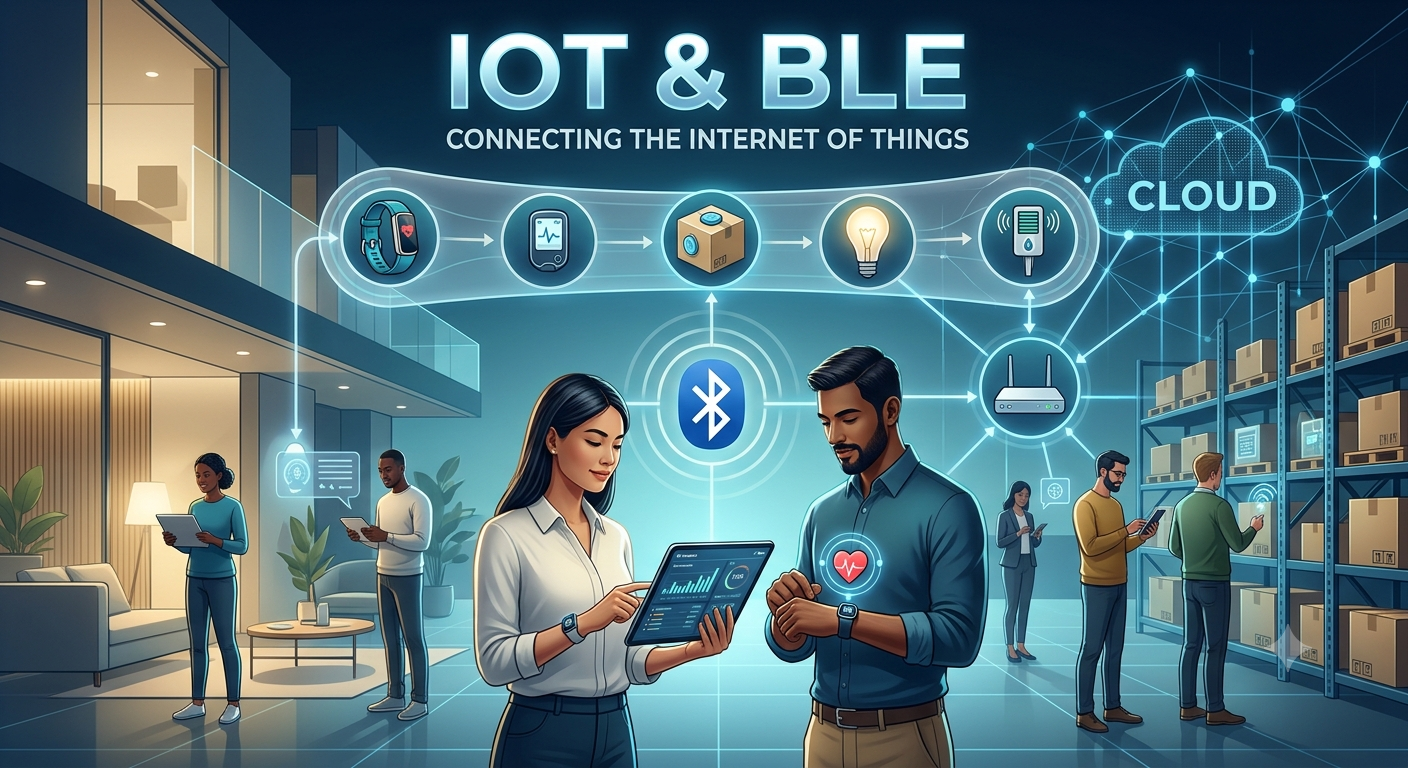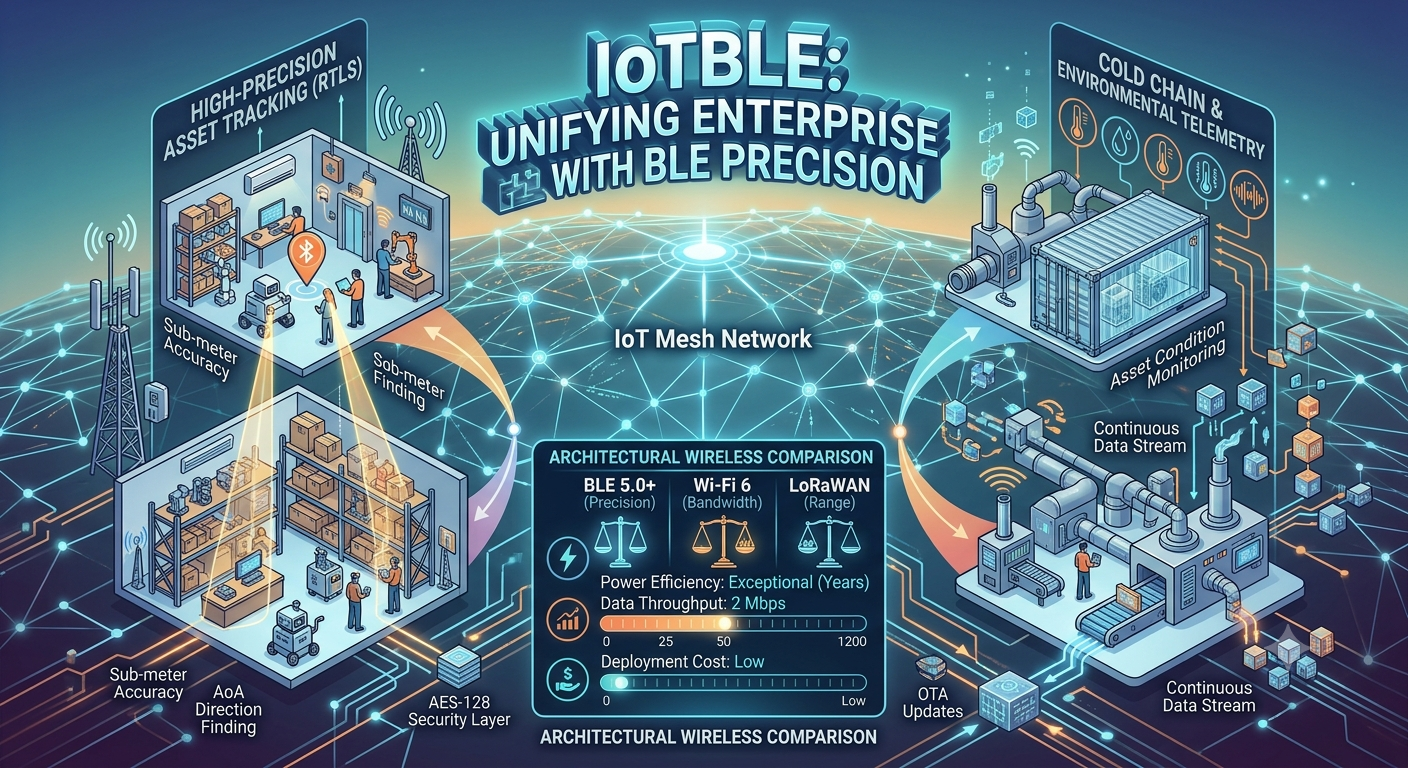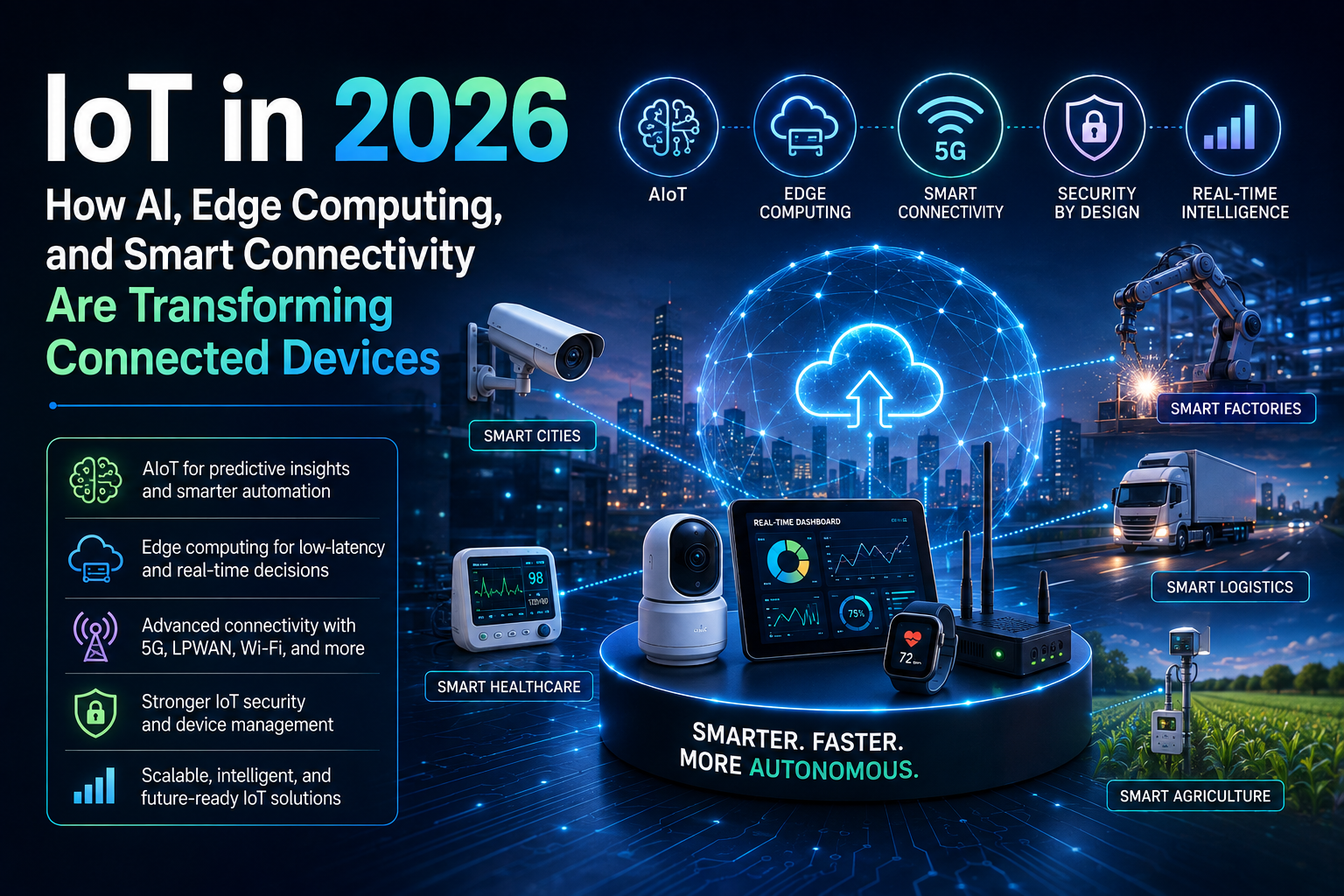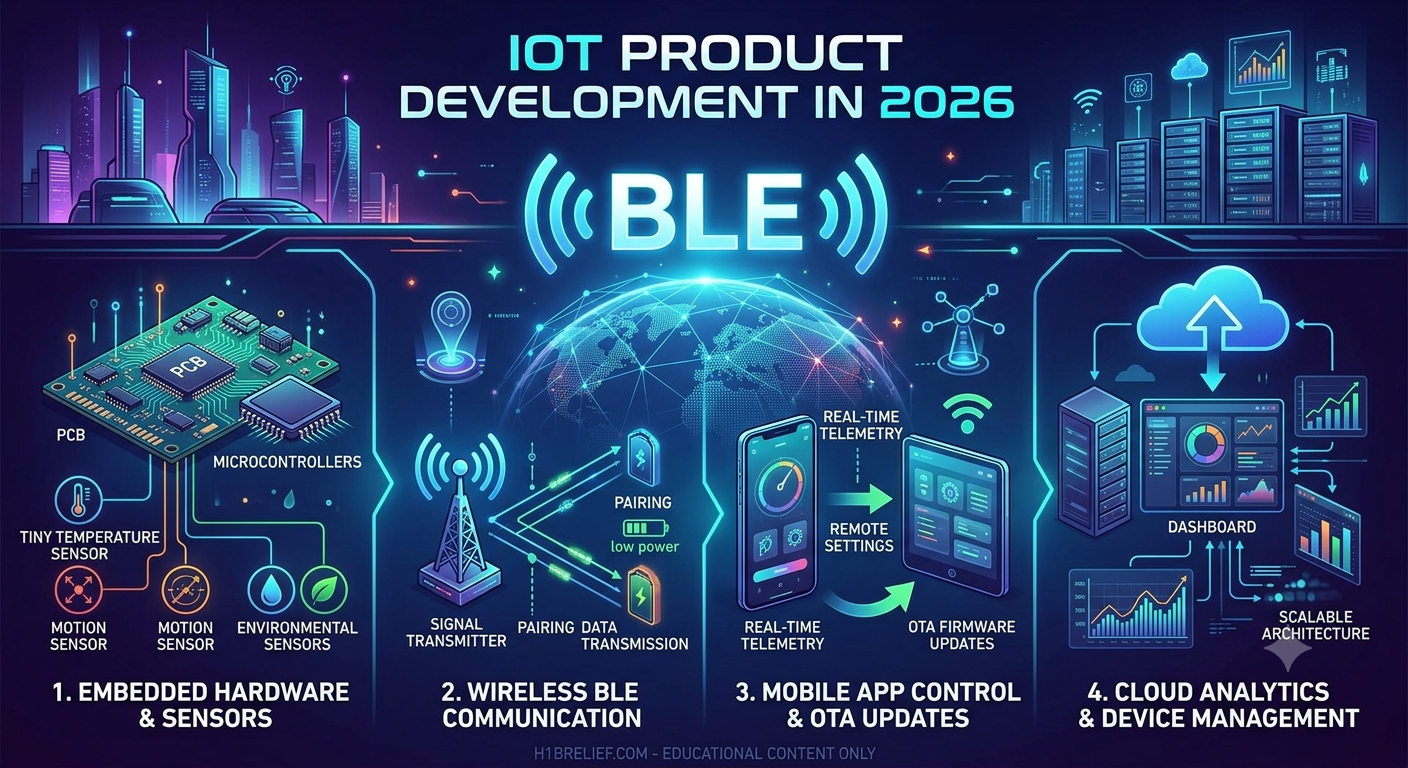
The Internet of Things (IoT) is transforming how businesses design, monitor, and manage connected products. From smart healthcare devices and industrial equipment to consumer electronics, logistics systems, and smart buildings, connected technology is becoming an important part of modern products.
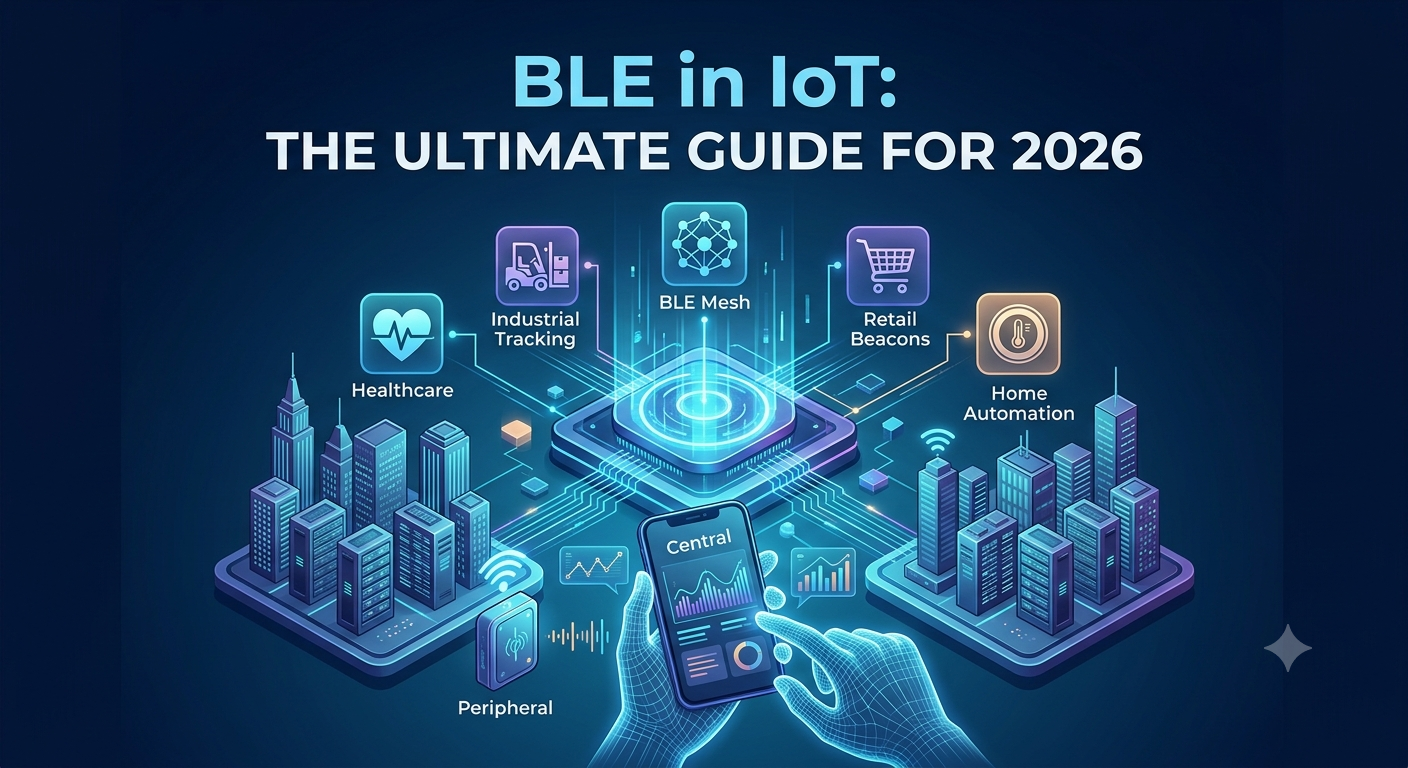
At the same time, Bluetooth Low Energy (BLE) has become an important connectivity technology for IoT products that require low power consumption, short-range wireless communication, and smartphone connectivity.
For businesses planning a connected product, combining IoT product development with BLE can provide a practical foundation for collecting sensor data, controlling devices, monitoring equipment, and building connected applications.
This guide explains how to approach IoT product development in 2026, the role of BLE, important technologies, development stages, costs, security considerations, and common challenges.
What Is IoT Product Development?
IoT product development is the process of designing and developing physical products that can connect to networks, collect data, communicate with other systems, and provide useful information or automated functionality.
An IoT product can contain:
- Sensors
- Microcontrollers
- BLE modules
- Wi-Fi connectivity
- Cellular connectivity
- GPS
- Cloud connectivity
- Mobile applications
- Web dashboards
- APIs
- Data analytics
- Device management systems
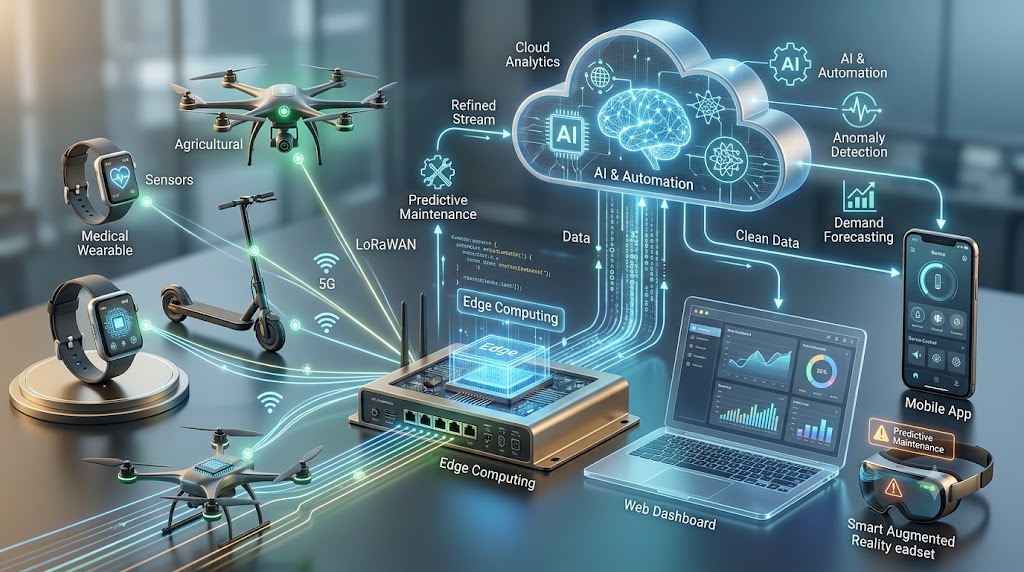
A complete IoT solution often combines hardware, firmware, connectivity, cloud infrastructure, software, and user interfaces.
What Is BLE and Why Is It Important for IoT?
Bluetooth Low Energy, commonly known as BLE, is a wireless communication technology designed for applications where low power consumption is important.
BLE can be useful for IoT products that need to communicate with:
- Smartphones
- Tablets
- Gateways
- Wearables
- Sensors
- Industrial equipment
- Smart home devices
- Medical devices
- Tracking products
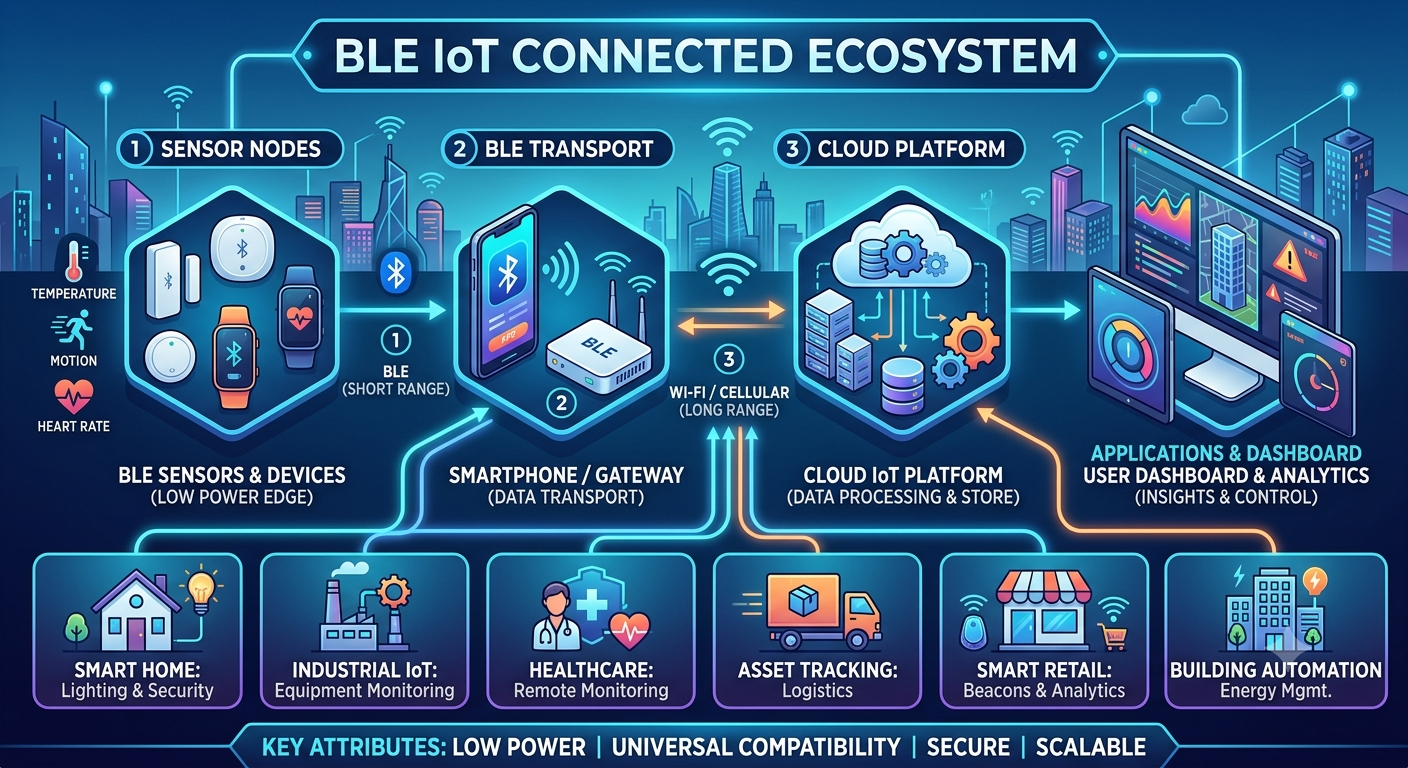
One common architecture is:
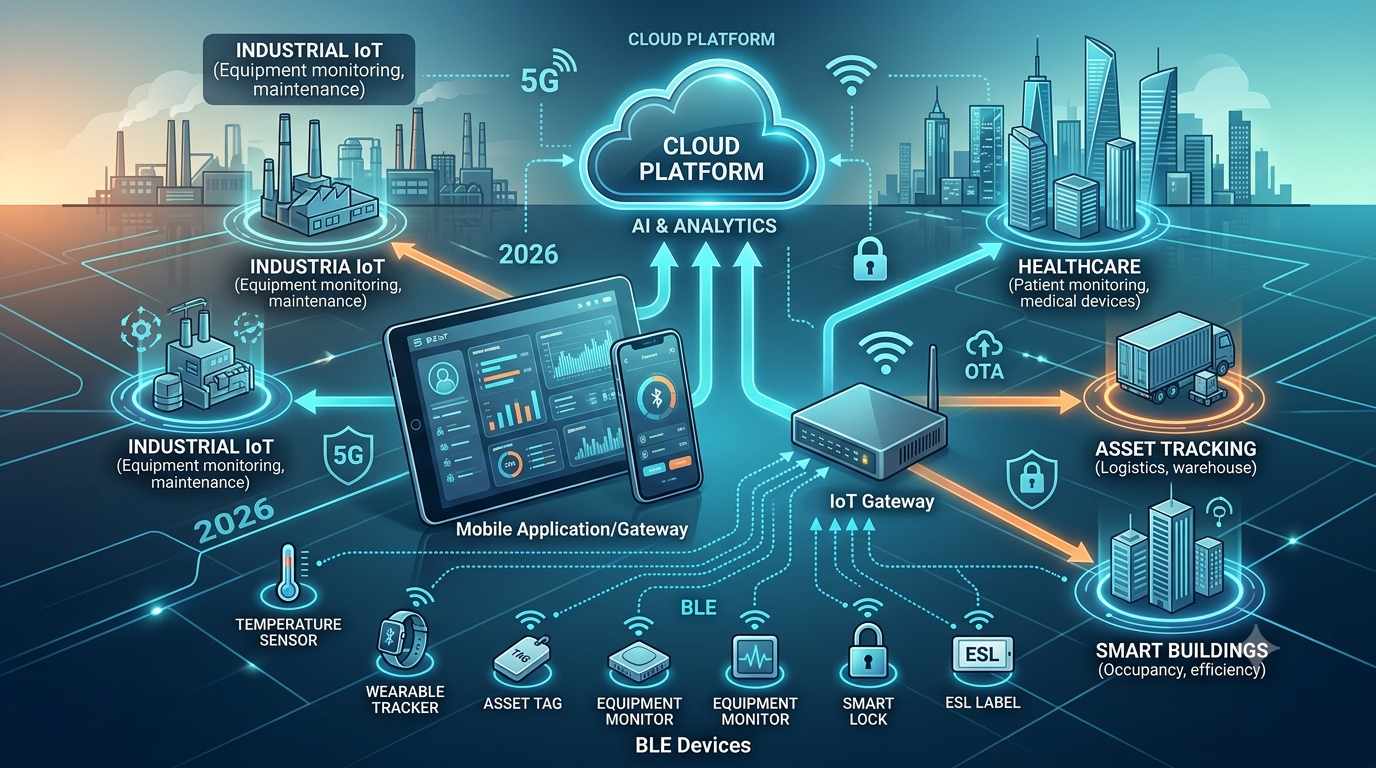
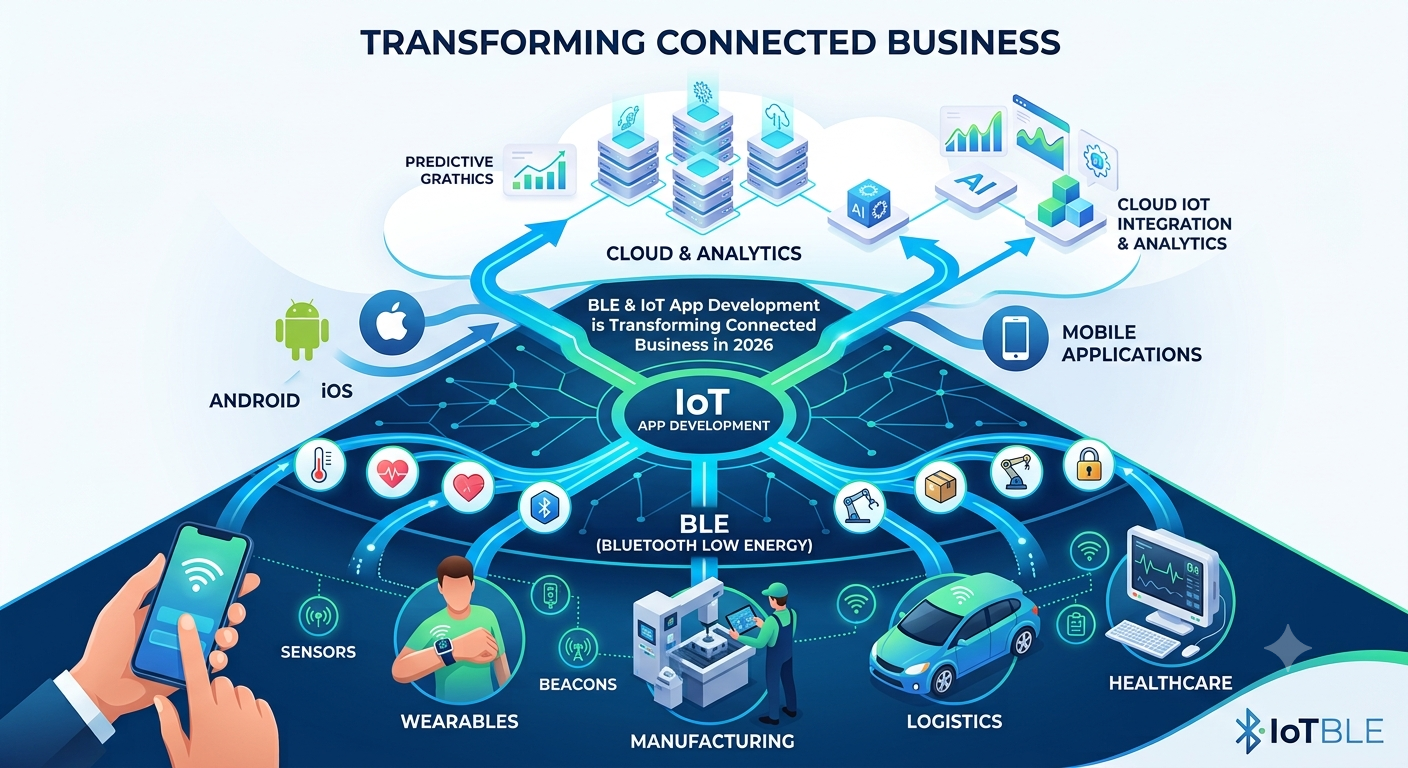
BLE Device → Mobile App → Internet → Cloud Platform → Web Dashboard
This approach allows a device to communicate locally with a smartphone while the application transfers relevant information to a cloud platform.
IoT + BLE: How the Technology Works
A BLE-enabled IoT product can contain a sensor or embedded controller that collects information.
For example:
Sensor → Microcontroller → BLE → Mobile Application → Cloud API → Database → Dashboard
The device can collect information such as:
- Temperature
- Humidity
- Motion
- Pressure
- Battery level
- Location-related data
- Device status
- Usage information
The mobile application can then communicate with the device and transfer selected data to a backend system.
Major IoT Product Development Components
Developing an IoT product requires coordination between several technology layers.
1. IoT Hardware Development
The hardware is the physical foundation of the connected product.
Hardware development may involve:
- Sensors
- Microcontrollers
- BLE chipsets
- Power management
- Batteries
- Communication modules
- PCB design
- Antennas
- Embedded components
The hardware should be designed according to the product’s environment, power requirements, communication range, size, and operating conditions.
2. Firmware Development
Firmware controls how the device operates.
It can manage:
- Sensors
- BLE communication
- Device configuration
- Power consumption
- Data collection
- Error handling
- Firmware updates
- Hardware components
Efficient firmware is particularly important for battery-powered IoT devices.
3. BLE Development
BLE development determines how the device communicates with other BLE-enabled systems.
Developers may work with:
- GATT
- GAP
- Services
- Characteristics
- Advertising
- Notifications
- Read/write operations
- Pairing
- Connection management
A properly designed BLE architecture can improve communication reliability and power efficiency.
4. Mobile App Development
Many IoT products use mobile applications as the user interface between the physical device and the cloud.
A mobile IoT application may provide:
- Device discovery
- BLE pairing
- Device configuration
- Real-time readings
- Notifications
- Device controls
- User accounts
- Data visualization
- Firmware update functionality
Apps can be developed for Android, iOS, or cross-platform environments depending on the product requirements.
5. Cloud Platform
The cloud layer can collect, process, store, and analyze data from connected devices.
A typical IoT cloud platform can include:
- API gateway
- Authentication
- Device management
- Databases
- Data processing
- Analytics
- Notifications
- Monitoring
- Reporting
Cloud infrastructure can also support thousands or millions of connected devices depending on the system architecture.
Common IoT Product Development Use Cases
IoT and BLE can be used across multiple industries.
Healthcare IoT
Connected healthcare products can use sensors and wireless communication to collect and transmit device information.
Potential applications include:
- Patient monitoring
- Medical equipment
- Wearable devices
- Fitness monitoring
- Medication-related devices
- Hospital asset tracking
Healthcare applications require additional consideration of privacy, security, regulatory, and data-management requirements.
Industrial IoT
Industrial IoT systems can connect machines, sensors, equipment, and monitoring platforms.
Applications include:
- Equipment monitoring
- Predictive maintenance
- Asset tracking
- Industrial sensors
- Environmental monitoring
- Production monitoring
Smart Home IoT
Smart home products can use wireless connectivity to control and monitor devices.
Examples include:
- Smart locks
- Sensors
- Lighting
- Thermostats
- Security devices
- Home automation products
Retail IoT
Retailers can use connected technology for:
- Inventory monitoring
- Asset tracking
- Customer engagement
- Smart shelves
- Temperature monitoring
- Equipment management
Logistics and Asset Tracking
BLE-enabled sensors and tags can help businesses monitor assets and equipment.
A solution can potentially track:
- Equipment
- Containers
- Inventory
- Vehicles
- Packages
- Tools
For larger geographic areas, BLE can be combined with technologies such as GPS, cellular connectivity, Wi-Fi, or dedicated gateways.
BLE Beacon and IoT Development
BLE beacons are small wireless devices that periodically transmit signals that compatible devices can detect.
Beacon-based IoT applications can be used for:
- Indoor positioning
- Asset tracking
- Proximity experiences
- Retail applications
- Employee tracking
- Equipment monitoring
- Location-aware applications
A beacon system may use multiple devices and a mobile application or gateway to determine proximity or location-related information.
IoT Gateway Development
An IoT gateway can act as a communication bridge between local devices and cloud infrastructure.
For example:
BLE Sensors → IoT Gateway → Internet → Cloud Platform
Gateways can be useful when many BLE devices need to communicate with a centralized system without requiring every sensor to have direct internet connectivity.
An IoT gateway can perform functions such as:
- Device communication
- Data aggregation
- Protocol conversion
- Local processing
- Security
- Cloud communication
- Device management
IoT Application Development
An IoT solution often requires software beyond the physical device.
An IoT application development project may include:
- Mobile application
- Web dashboard
- Cloud backend
- REST APIs
- Device management
- User management
- Analytics
- Notifications
- Reporting
The application becomes the interface through which users interact with connected products.
IoT Data Analytics
Connected devices generate large volumes of information.
An IoT analytics platform can transform raw sensor information into useful business insights.
For example, an industrial IoT system could analyze:
- Equipment temperature
- Operating cycles
- Vibration
- Energy consumption
- Device downtime
- Maintenance events
Businesses can use these insights to identify patterns and improve operational decision-making.
IoT Security
Security should be considered throughout IoT product development.
An IoT ecosystem may contain multiple potential attack surfaces:
Device + Firmware + BLE + Mobile App + API + Cloud + Dashboard
Security considerations can include:
- Device authentication
- Secure BLE communication
- Encryption
- Secure API authentication
- Access control
- Secure firmware
- Signed firmware updates
- Credential management
- Secure cloud infrastructure
- Logging and monitoring
IoT security should be considered during hardware design, firmware development, application development, cloud architecture, and deployment.
OTA Firmware Updates
Over-the-air (OTA) updates allow developers to update device firmware without physically accessing every device.
OTA functionality can be valuable when IoT products are deployed across many locations.
A secure OTA system should consider:
- Firmware authenticity
- Update authorization
- Encryption where appropriate
- Version management
- Rollback mechanisms
- Update failure handling
This can make long-term IoT product maintenance more manageable.
IoT Product Development Process
A successful IoT project usually requires a structured development process.
Step 1: Define the Product
Identify:
- Target users
- Business problem
- Product features
- Operating environment
- Connectivity requirements
- Power requirements
Step 2: Select Hardware
Choose:
- Microcontroller
- Sensors
- BLE chipset
- Battery
- Communication modules
- Other hardware components
Step 3: Develop the Prototype
Build an initial prototype to validate:
- Hardware
- Sensors
- BLE communication
- Power consumption
- Device behavior
Step 4: Develop Firmware
Implement device functionality and communication protocols.
Step 5: Develop Mobile and Web Applications
Build the interfaces required to configure, monitor, and control the connected device.
Step 6: Build Cloud Infrastructure
Develop APIs, databases, device management, analytics, and other backend components.
Step 7: Integrate the Complete System
Connect:
Hardware + Firmware + BLE + Mobile App + Cloud + Dashboard
Step 8: Test the Product
Testing can include:
- Functional testing
- BLE testing
- Hardware testing
- Battery testing
- Connectivity testing
- Security testing
- Performance testing
- Environmental testing
Step 9: Prepare for Production
The final stage can include:
- Hardware optimization
- PCB refinement
- Manufacturing preparation
- Firmware deployment
- Cloud scaling
- Application deployment
How Much Does IoT Product Development Cost?
The cost of developing an IoT product varies considerably.
A basic BLE sensor with a mobile application may require a relatively limited technology stack.
A larger commercial IoT platform may require:
- Custom PCB
- Multiple sensors
- BLE and Wi-Fi
- Firmware
- Android application
- iOS application
- Cloud backend
- Web dashboard
- Device management
- Analytics
- Security
- OTA updates
The overall cost depends on the hardware complexity, software features, number of platforms, cloud architecture, testing requirements, manufacturing requirements, and development timeline.
Common IoT Development Challenges
Battery Life
Battery-powered products must carefully manage power consumption.
Connectivity
Wireless communication can be affected by distance, interference, physical obstacles, and environmental conditions.
Hardware Reliability
IoT hardware may need to operate for long periods under different environmental conditions.
Scalability
Cloud infrastructure should be designed to support the expected number of connected devices and data volume.
Security
Every additional connected component can introduce additional security considerations.
Manufacturing
Moving from a prototype to mass production can require hardware redesign, testing, certification, sourcing, and manufacturing preparation.
Why Choose an IoT and BLE Development Company?
An experienced IoT product development company can help businesses coordinate multiple technology layers.
A development team can provide:
- IoT consulting
- Hardware development
- PCB design
- Firmware development
- BLE development
- Mobile app development
- Cloud development
- IoT API development
- Dashboard development
- Device management
- OTA update systems
- IoT security
- Product prototyping
Working with one team across these layers can simplify integration between the physical product and software ecosystem.
Build Your IoT Product with BLE
The combination of IoT and Bluetooth Low Energy can provide a practical foundation for connected products that need low-power wireless communication.
From smart sensors and healthcare devices to industrial monitoring systems, asset trackers, wearables, and smart home products, IoT architecture can be customized around the product’s requirements.
IoTBLE helps businesses explore and develop connected product solutions involving BLE development, IoT application development, firmware, mobile applications, cloud platforms, and connected-device ecosystems.
If you are planning an IoT product, start by defining the device requirements, sensors, connectivity model, mobile or web experience, cloud architecture, security requirements, and expected production scale.
Frequently Asked Questions
What is IoT product development?
IoT product development is the process of creating connected physical products that combine hardware, firmware, wireless communication, software, cloud services, and data systems.
Why use BLE for IoT?
BLE is useful for IoT products that need short-range wireless communication with relatively low power consumption, including sensors, wearables, trackers, and connected devices.
Can BLE connect an IoT device to the internet?
BLE itself is generally a local wireless communication technology. A smartphone or IoT gateway can act as a bridge between a BLE device and internet-connected cloud services.
How much does IoT product development cost?
The cost depends on hardware complexity, firmware, BLE functionality, mobile applications, cloud infrastructure, security, testing, manufacturing requirements, and product scale.
Can IoT devices receive firmware updates remotely?
Yes. IoT products can be designed with OTA firmware update functionality, allowing compatible devices to receive firmware updates remotely.
Can IoT and BLE be used for asset tracking?
Yes. BLE tags, beacons, gateways, mobile applications, and cloud systems can be combined to create asset-tracking solutions.
What is an IoT gateway?
An IoT gateway acts as an intermediary between connected devices and cloud or enterprise systems. It can aggregate data, communicate with devices, perform processing, and transmit information to backend systems.
What industries use IoT product development?
IoT products are used in industries including healthcare, manufacturing, logistics, retail, smart homes, automotive, agriculture, energy, and consumer electronics.